
Projects don't fail on site. They fail in the gap between plan and reality
Most construction projects still run on static plans: spreadsheets, disconnected tools, and Gantt charts updated once a month. By the time a delay reaches the schedule, it has already cost weeks. This is the problem Gantivity was built to solve.
The plan is written once. The project changes every day.
A schedule is a forecast, not a contract with reality. Yet on most projects, the baseline built at kickoff is the same file leadership is still looking at months later — while the real project drifted long ago.
Static plans in disconnected tools
The schedule lives in one tool, tasks in another, budgets in a spreadsheet, and site records in someone's notebook. No system holds the full picture, so no one does either.
Monthly-updated Gantt charts
The programme gets a formal update once a month — often by a single planner reconciling inputs by hand. Between updates, the "official" schedule is fiction with a professional-looking legend.
Delays discovered too late
Slippage compounds quietly along the critical path. It surfaces at the monthly review — after float is burned, options are gone, and the only levers left are expensive: acceleration, claims, or a slipped handover.
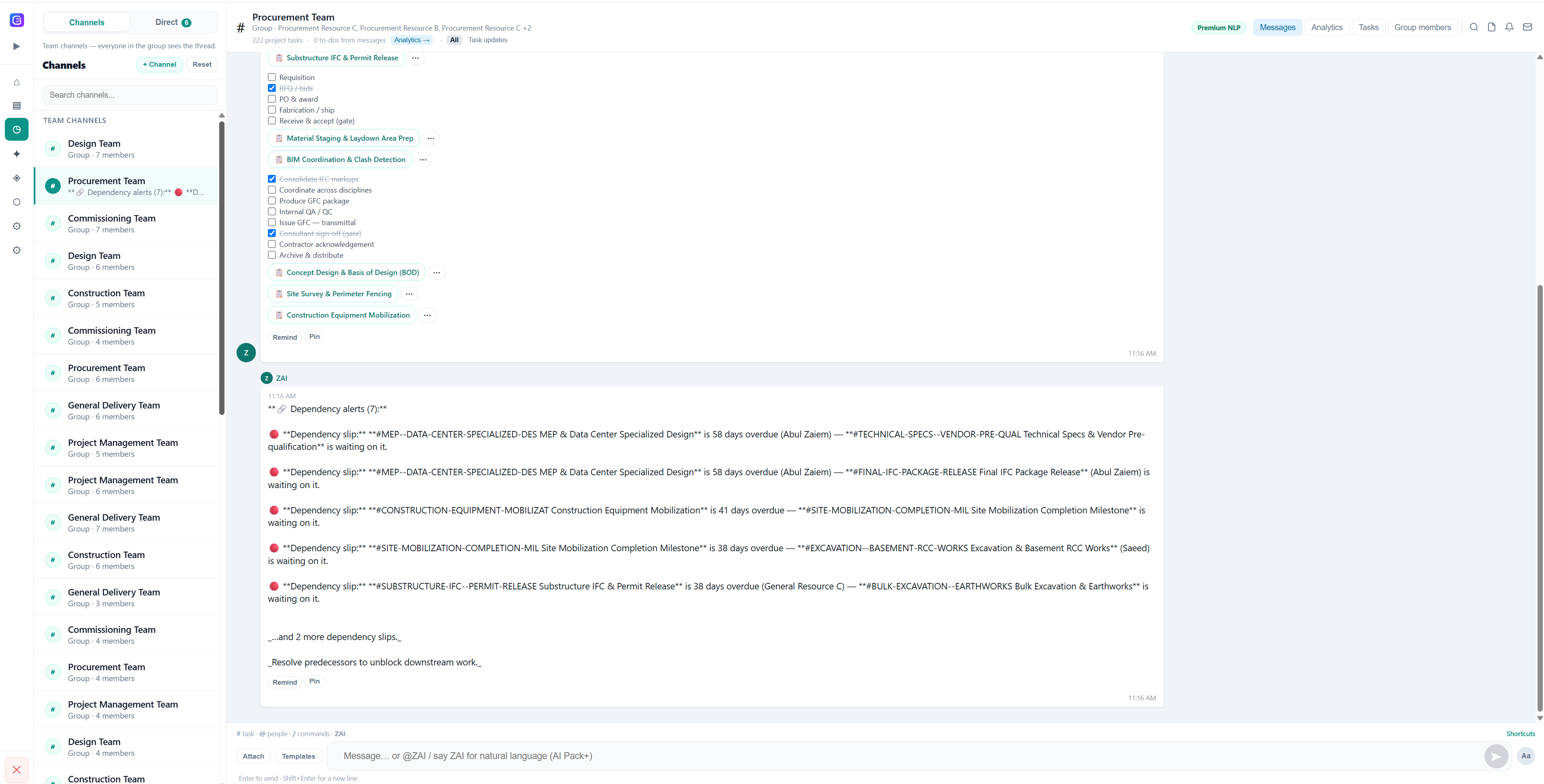
The real project runs in WhatsApp. The schedule never hears about it.
Day-to-day coordination happens in chat threads, phone calls, and email — completely detached from the plan. Site reality never reaches the schedule, and the schedule never reaches the site.
- Progress updates buried in group chats no planner reads
- Issues raised verbally, tracked nowhere, forgotten by Friday
- Daily progress reports written for the record — not connected to a single task or date
- Escalations that depend on who shouts loudest, not on what threatens the critical path
What the industry already knows
Ask anyone who has delivered a major programme — the patterns are so common they barely need citation.
Overruns are the norm, not the exception
Across the industry, large construction projects routinely finish late and over budget. The surprise isn't that projects slip — it's how late the slip becomes visible to the people who could have acted.
Rework and waiting eat productive time
A large share of site time goes to waiting on decisions, information, and predecessors — waste that traces directly back to coordination failures, not to the crews doing the work.
Reporting consumes the people who should be managing
Project engineers and planners spend days each month assembling status decks from stale data. The report is out of date before it's presented — and the effort produced no new control.
Gantivity makes the schedule the living system of record
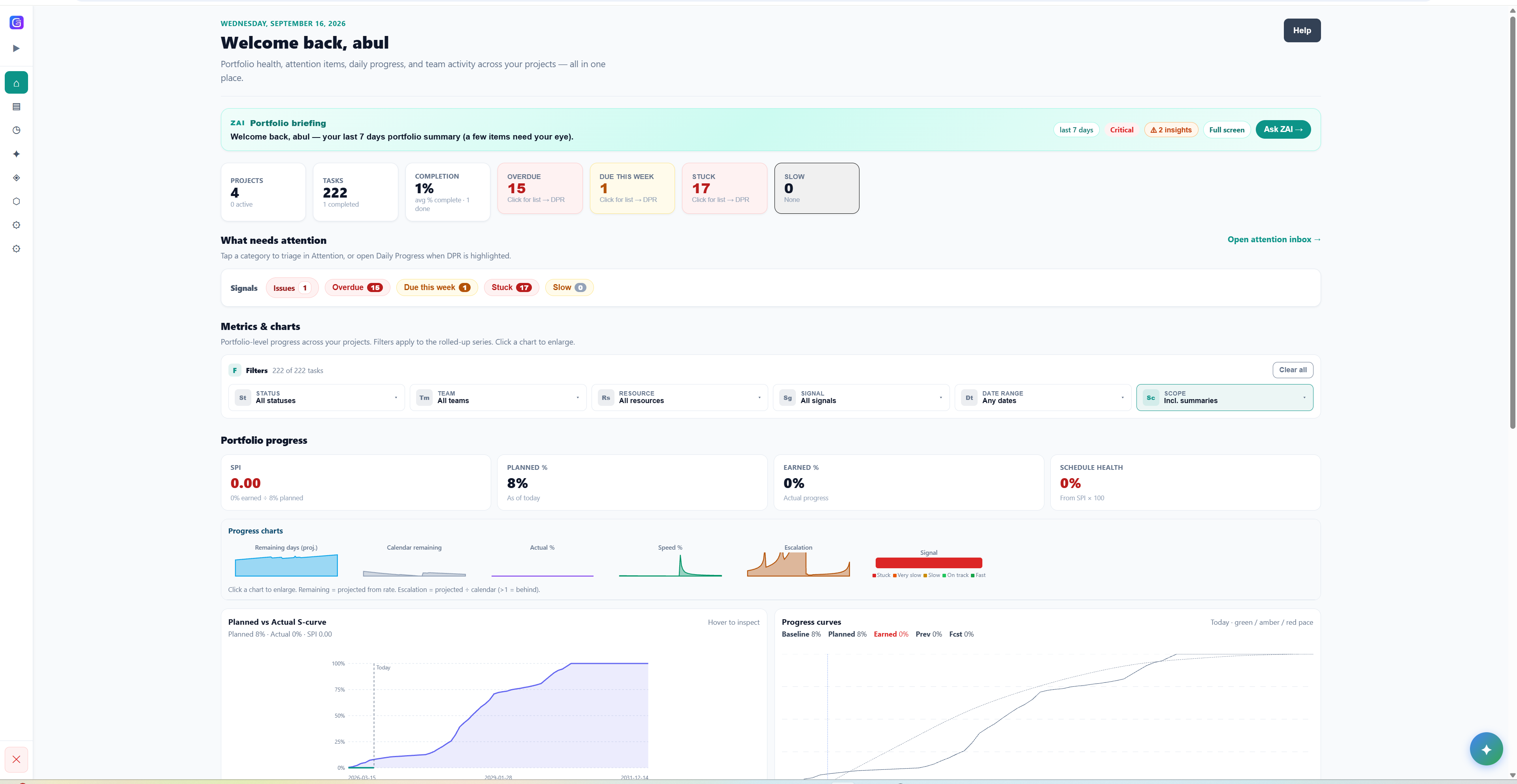
Instead of a plan that decays and a chat stream nobody reconciles, Gantivity connects them: AI scheduling builds the plan, daily progress reports feed it from the work face, and delay prediction plus automated escalations act on the difference — every day, not once a month.
- AI-generated schedules with a live, Gantt-backed critical path
- Daily progress reports tied to tasks — site reality reaches the plan
- Execution signals and delay prediction that flag slippage early
- Escalations driven by priority and severity, not volume
Stop discovering delays at the monthly review
Gantivity gives construction and project controls teams a live schedule, daily field truth, and early warning — before the float is gone.